Never walked on snow? Korea’s mountains turn white each winter, and some of them start at a subway station. Here is what to expect, what to carry and where to go.
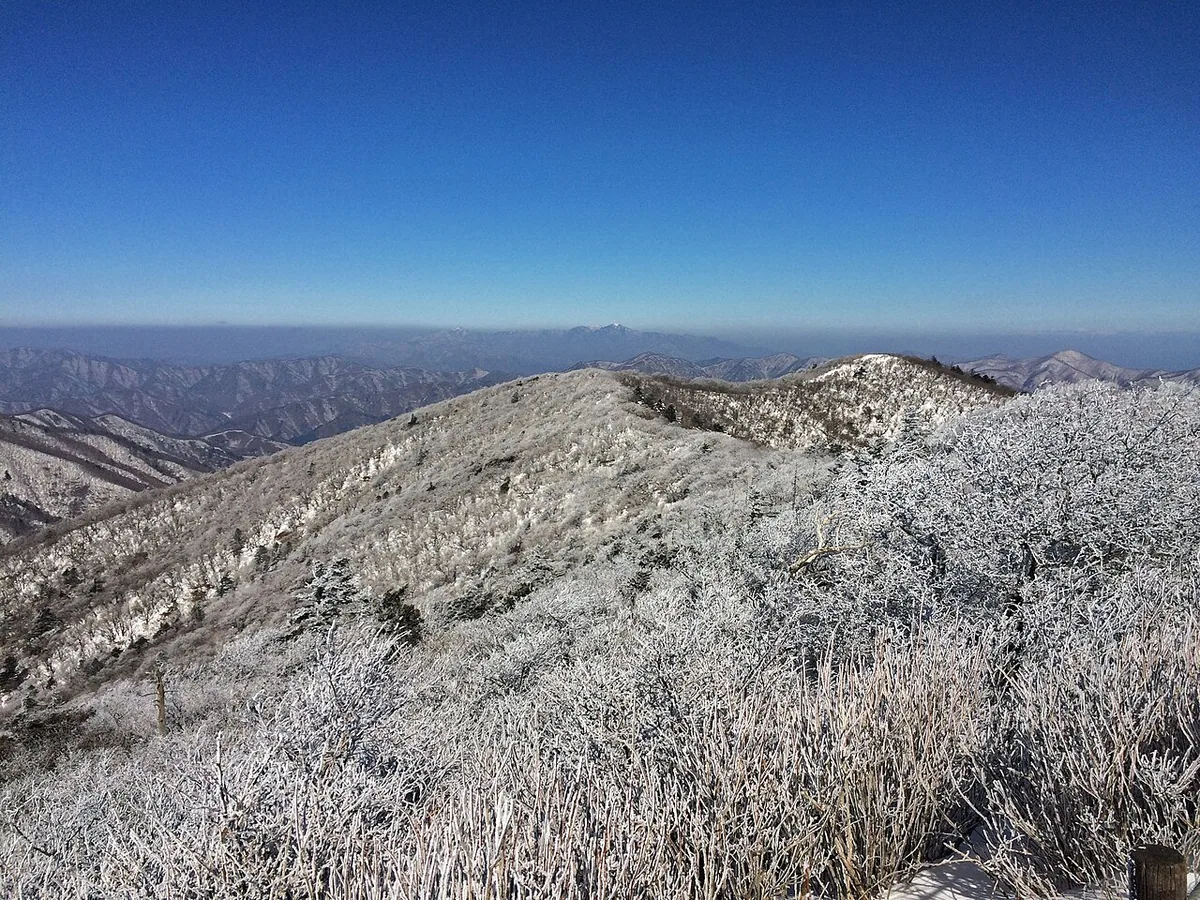
Start with the kind of day you want: a mountain reached from Seoul, frosted ridges in Odaesan or Taebaeksan’s winter scenery. Then choose the trail and the journey home.
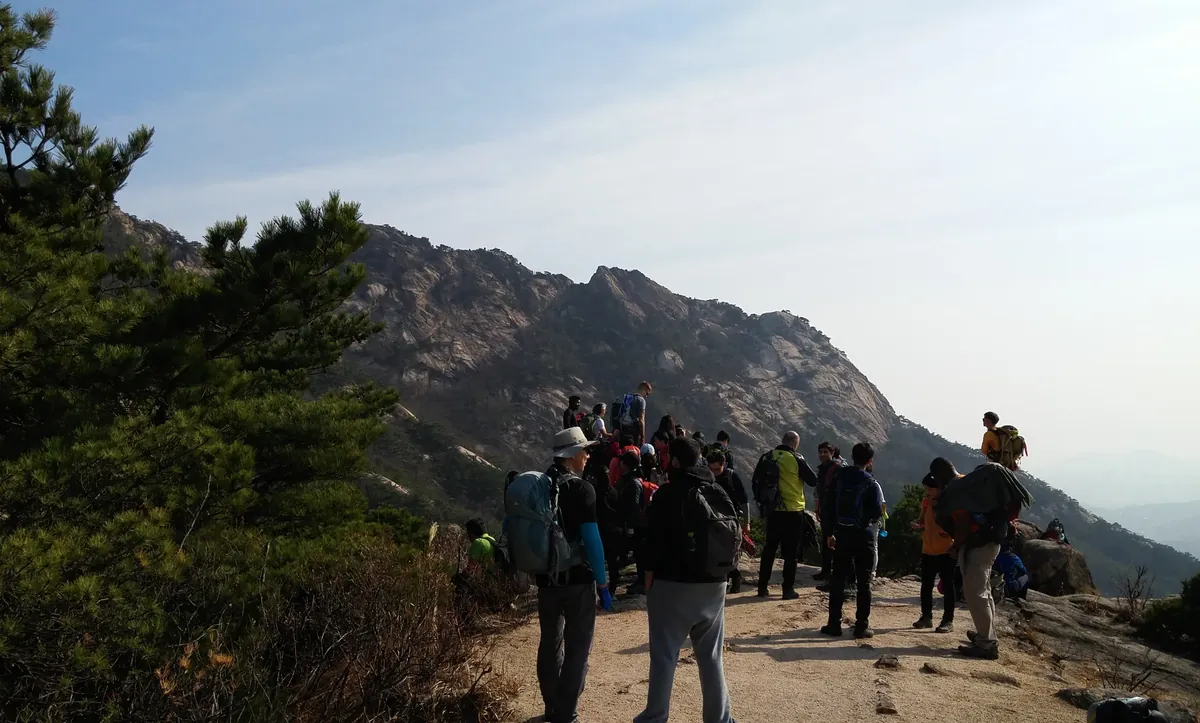
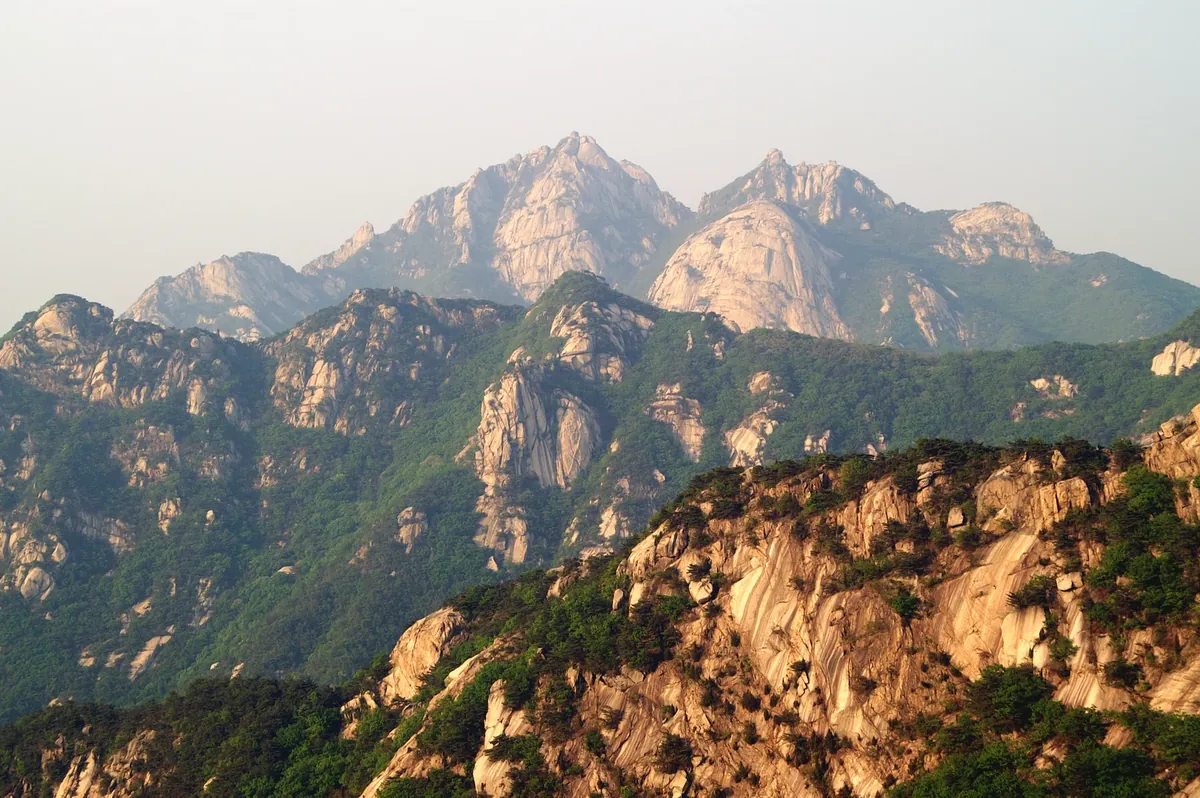
Choose Baegundae when you want a summit outing with rocky ground, steps and a steep final ascent. The 1.9 km outward trail starts at Baegun Visitor Center; the walk from Bukhansan Ui Station and the return take additional time.
Choose Odaesan when winter mountain scenery is the reason for your trip. The park includes separate Odaesan, Sogeumgangsan and Gyebangsan districts, so select the district and trail entrance before planning transport.
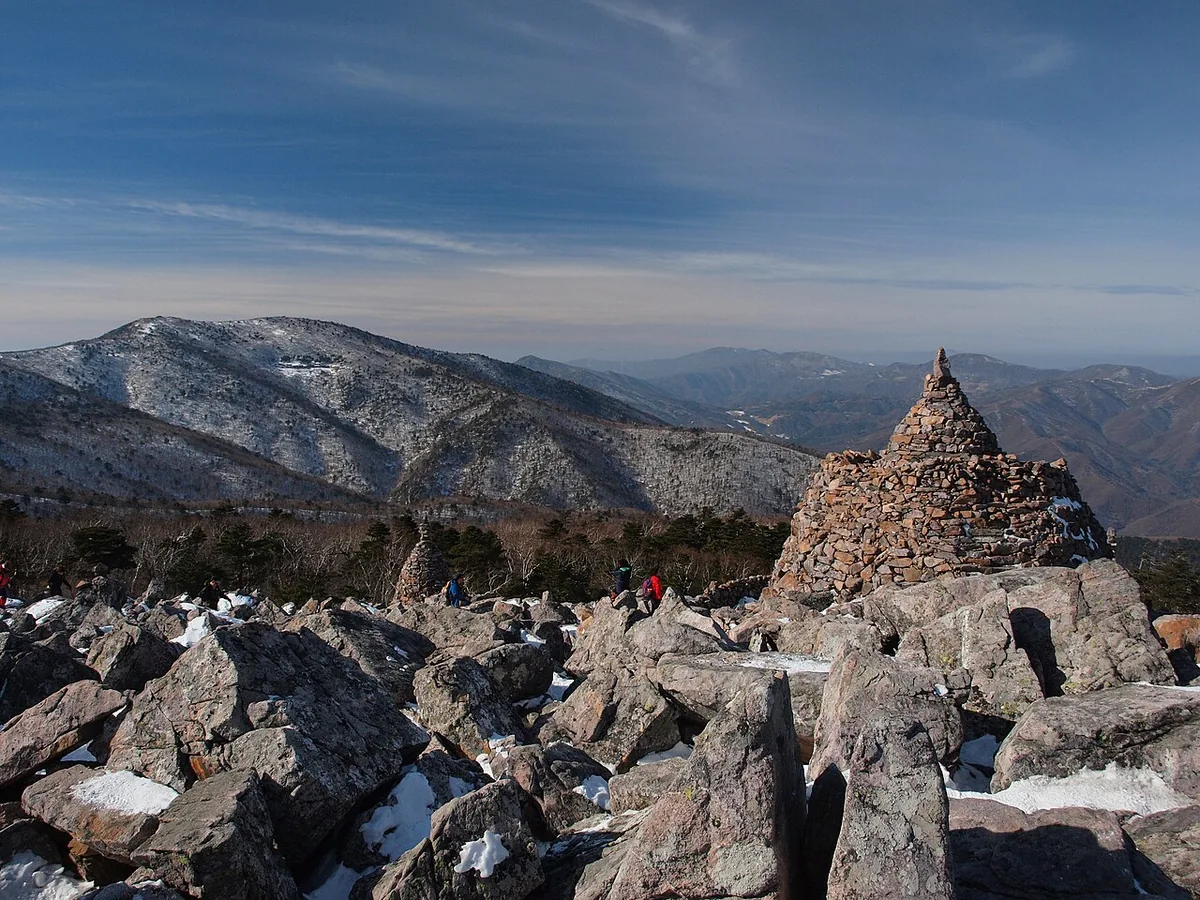
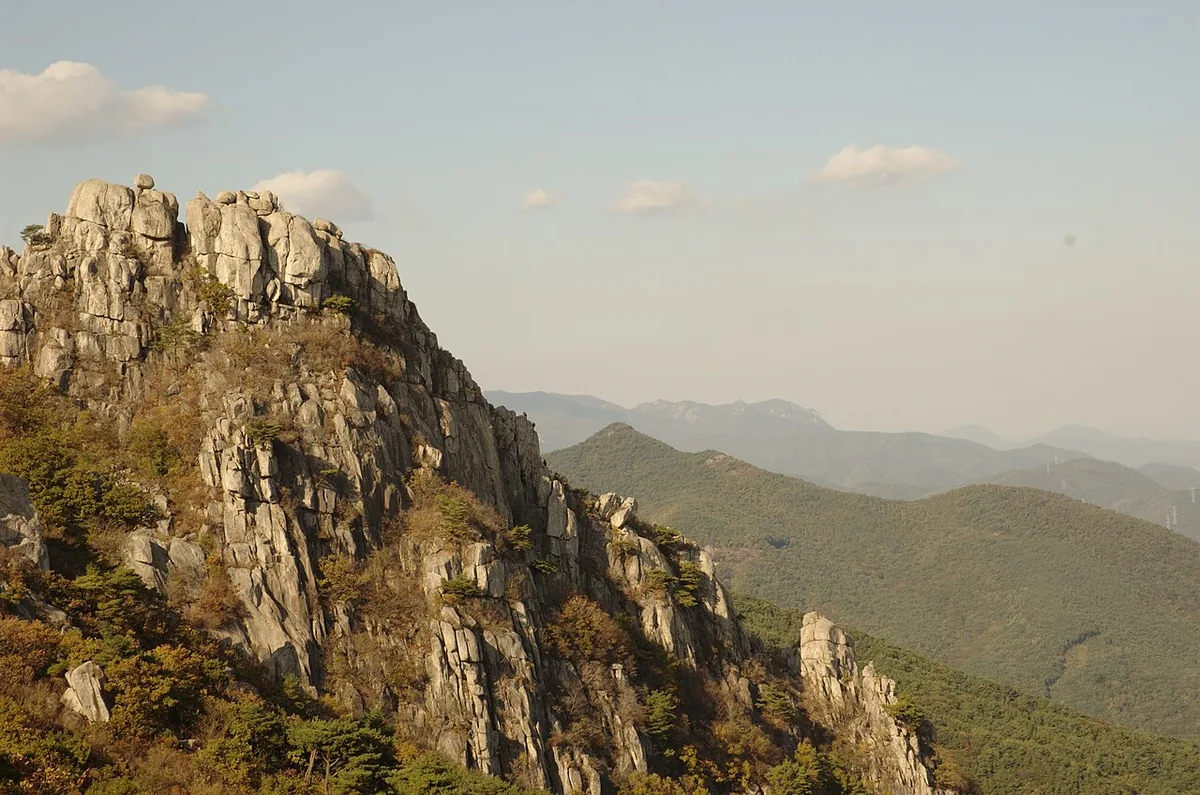
Taebaeksan’s snow-streaked peaks, seen from Munsubong.Photo: Dcpeets
GANGWON · YEWS & HIGH PEAKS
Taebaeksan, for its winter landscape
Choose Taebaeksan for the snow-covered yew forests described by the national park and the mountain around Cheonjedan. Decide which trail entrance and summit you want before arranging the onward trip from town.
Winter trails have many icy stretches. The Korea National Park Service asks winter walkers to carry crampons and gaiters and to stay on marked trails. Outdoor shops in Korea call them 아이젠aijen and 스패츠seupacheu.
2
Dress in thin layers
The park service advises several thin layers to keep your body warm, and a spare phone battery. Numbness or shivering are signs of hypothermia: ask for help straight away. Korea’s emergency number is 119.
3
If snow starts falling
The park service’s advice is to head down at once, or to the nearest shelter. Heavy snow can close trails, so check the park’s closure notices before you set out.
4
Bad forecast? Go another day
The park service runs its winter disaster season from 15 November to 15 March and says postponing is the safest choice when the weather turns. On Seoraksan, temperatures have fallen to −25 °C.
02 / NO CAR NEEDED
Snow, by subway.
Three snowy mountains whose trails begin from city transport, in the Forest Service guide’s own words.