
Mountain · North Jeolla
Naejangsan
내장산
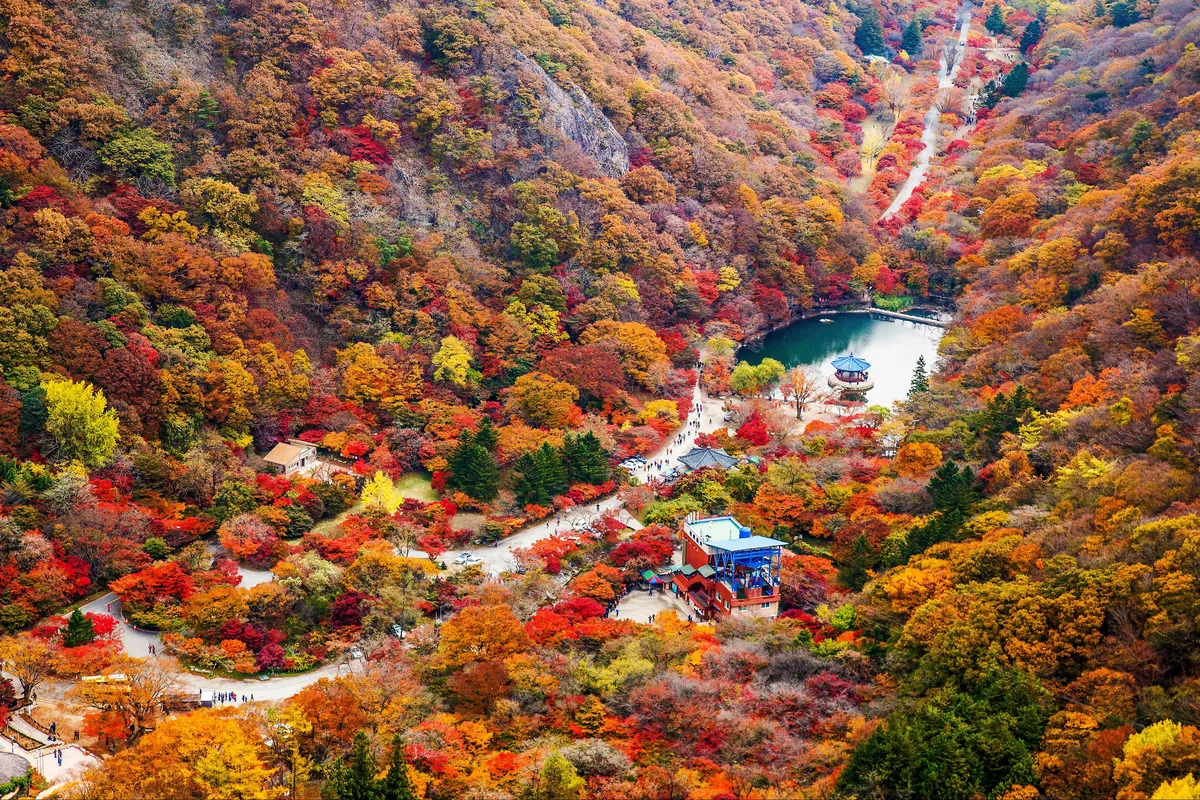
Naejangsan (763.5 m): Korea’s most famous autumn-colour mountain, with a tunnel of 108 maples to Naejangsa temple.
-
15 Nov – 15 Dec 2026
Autumn fire-season trail closures
The Korea National Park Service closes 148 trail sections in the national parks for the autumn wildfire season: 115 fully and 33 in part. Other trails stay open as usual. Check the closure list for your park before you set off.
Place details
- Region
- North Jeolla
- Type of place
- Mountain
- Locality in the source
- 정읍시 · 순창군
- Summit height
- 763.5 m summit altitude, Korea Forest Service guide p. 80
Locate the place
Search by the Korean name and locality, then check the public entrance with the managing authority.
About Naejangsan
Naejangsan, on the border of Jeongeup and Sunchang, became a national park in 1971 and is Korea’s most famous autumn-colour mountain. Its small, thin-leaved maples turn a vivid red from late October into early November.
Nine peaks ring two valleys and two waterfalls, and rare evergreens such as torreya and daphniphyllum are protected here. Old geographies named it one of the five great mountains of Honam and the Diamond Mountains of the south.
From the park entrance a tunnel of 108 maples leads to Naejangsa temple.
Through the seasons
- Spring
- Soft waves of cherry blossom
- Summer
- The Wonjeok valley nature trail
- Autumn
- The 108-maple tunnel to Naejangsa
- Winter
- Snow on the ring of peaks
Worth seeing
- Maple tunnel 내장산 단풍터널From Iljumun gate to Naejangsa.
- Seoraebong and Baengnyeonam 서래봉 백련암A hermitage under the rock ridge.
Where the main trail starts
Naejangsan car park 1 내장산 제1주차장
A main route in the Forest Service guide begins here. Search the Korean name to plan your bus or taxi to the entrance.
Written from the Korea Forest Service guide 꼭 한번 가 볼 우리 100대 명산, p. 80.