
Mountain · South Gyeongsang / North Gyeongsang
Gayasan
가야산
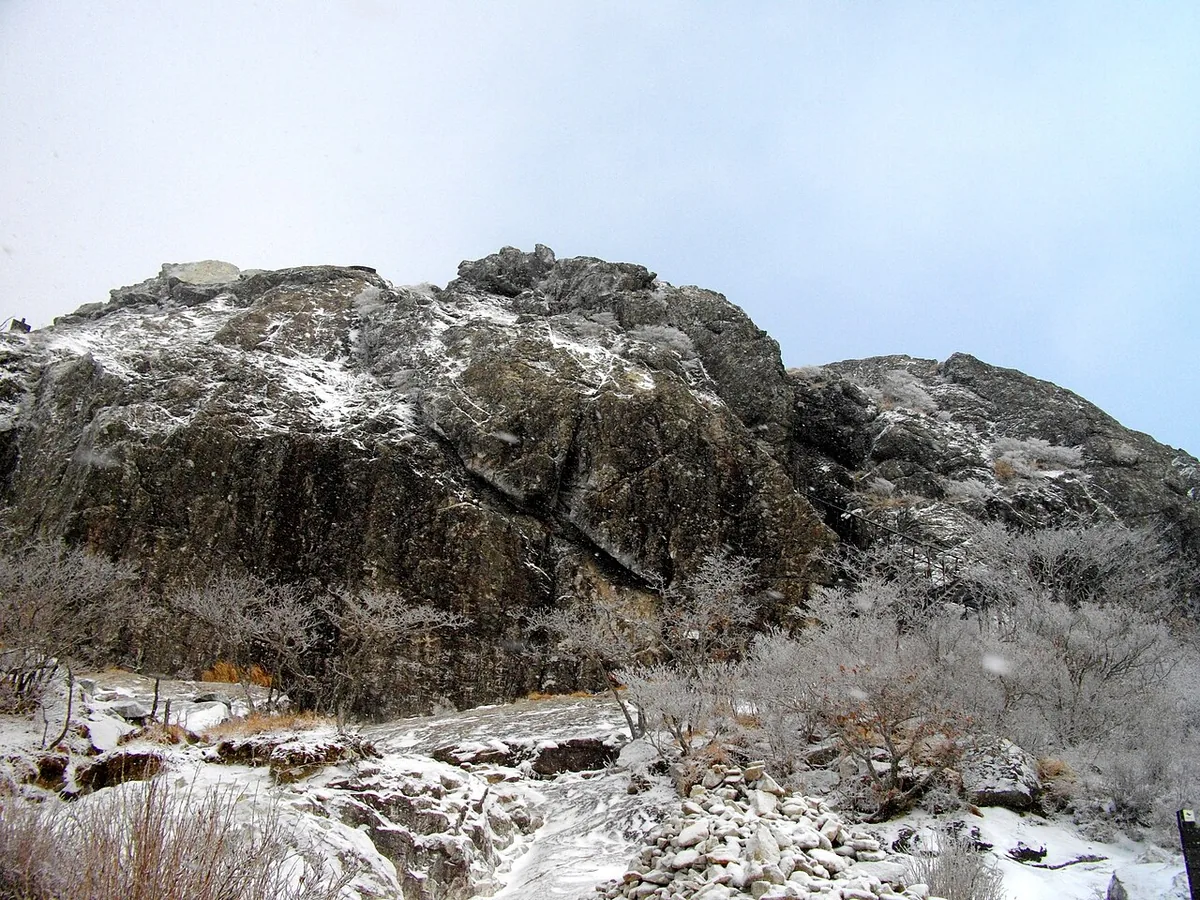
Gayasan (1,432.6 m): national park peaks above Haeinsa, home of the Tripitaka Koreana, with the Hongnyudong valley and Manmulsang ridge.
-
15 Nov – 15 Dec 2026
Autumn fire-season trail closures
The Korea National Park Service closes 148 trail sections in the national parks for the autumn wildfire season: 115 fully and 33 in part. Other trails stay open as usual. Check the closure list for your park before you set off.
Place details
- Region
- South Gyeongsang · North Gyeongsang
- Type of place
- Mountain
- Locality in the source
- 합천군 · 거창군 · 성주군
- Summit height
- 1,432.6 m summit altitude, Korea Forest Service guide p. 16
Locate the place
Search by the Korean name and locality, then check the public entrance with the managing authority.
About Gayasan
Gayasan spans Hapcheon and Geochang in South Gyeongsang and Seongju in North Gyeongsang. Long counted among the eight finest sights of Joseon, it shelters Haeinsa, the temple that keeps the Tripitaka Koreana woodblocks.
Peaks over 1,000 m stand around the main summit, Sangwangbong, like a folding screen: soft and earthy on the Hapcheon side, steep and rocky on the Seongju side. It became Korea’s ninth national park in 1972.
The name may honour the ancient Gaya kingdom, whose finest mountain this was, or the sacred Gaya mountain near Bodh Gaya in India.
Through the seasons
- Spring
- Mist rolling between green ridges
- Summer
- Wildflowers on the summit
- Autumn
- Autumn colour among rock towers
- Winter
- A snow-covered painting of a mountain
Worth seeing
- Hongnyudong Valley 홍류동계곡Four kilometres of pools and old pines below Haeinsa.
- Manmulsang ridge 만물상Closed to walkers for 40 years until 2010, still wild.
Where the main trail starts
Haeinsa Temple Museum 해인사 성보박물관
A main route in the Forest Service guide begins here. Search the Korean name to plan your bus or taxi to the entrance.
Written from the Korea Forest Service guide 꼭 한번 가 볼 우리 100대 명산, p. 16.