
National park · North Gyeongsang
Juwangsan National Park
주왕산국립공원
Juwangsan National Park (106.114 km²): cliffs of welded tuff along the Juwang valley, Jusanji pond and the temple Daejeonsa.
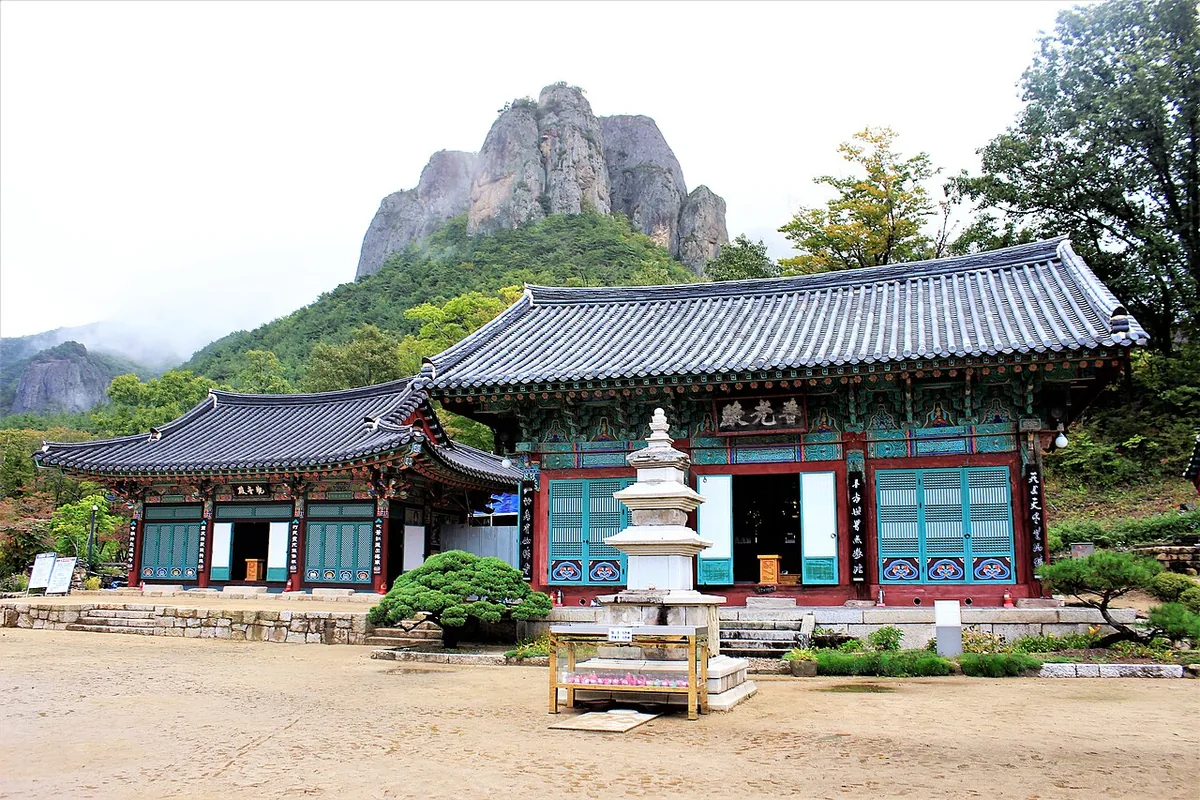
-
15 Nov – 15 Dec 2026
Autumn fire-season trail closures
The Korea National Park Service closes 148 trail sections in the national parks for the autumn wildfire season: 115 fully and 33 in part. Other trails stay open as usual. Check the closure list for your park before you set off.
Plan your visit
The waterfall valley, a pond walk or Jeolgol?
The Daejeonsa entrance suits the waterfall walk. Jusanji and Jeolgol lie in a separate part of the park, so choose your starting point before planning the bus journey.
-
Cliffs and waterfalls from the main entrance
Daejeonsa to Yongchu Falls
Start at Juwangsan visitor centre on the Daejeonsa side 주왕산국립공원 탐방안내소
Walk through the temple approach into the valley and follow the Yongchu Falls signs. This gives you the cliffs and gorge without choosing a summit route. The longer valley walk continues beyond Yongchu toward Jeolgu and Yongyeon Falls.
Official valley-walk guide -
Pond scenery and waterside trees
Jusanji Pond
Start at Jusanji car park and pond approach 주산지 주차장
Choose Jusanji for the reservoir and old willows growing in its water. Approach from the Jusanji parking area and return the same way. Plan this as a separate stop from the Daejeonsa waterfall valley.
Official Jusanji visitor information -
A longer mountain route with seasonal booking
Jeolgol to Gamebong
Start at Jeolgol branch office 절골분소
For a mountain outing from the Jeolgol valley, use the park’s Jeolgol–Gamebong reservation service. It publishes the autumn booking period and available places. This route begins at Jeolgol branch office on Jusanji-gil.
Jeolgol route and reservations
The bus journey reaches the Daejeonsa side
Choose Juwangsan Bus Terminal for the main visitor centre and waterfall valley. Jusanji Pond and Jeolgol need their own onward journey; they are separate starting points from the terminal approach below.
Place details
- Region
- North Gyeongsang
- Type of place
- National park
Getting there
Start at Dong Seoul Bus Terminal
Entrance or stop 주왕산국립공원 탐방안내소
- Book an intercity bus specifically to Juwangsan Bus Terminal (주왕산버스터미널). Cheongsong town and Juwangsan are separate stops.
- Get off at Juwangsan Bus Terminal and walk to the Juwangsan National Park Visitor Center (주왕산국립공원 탐방안내소) on the Daejeonsa side of the park.
About Juwangsan National Park
Juwangsan, on a branch of the Taebaek range in Cheongsong and Yeongdeok, North Gyeongsang, became a national park on 30 March 1976 and covers 106.114 km². In 2017 the area was listed as a UNESCO Global Geopark.
The park is built of Cretaceous welded tuff from volcanic eruptions. Its geology sites include the Gieam cliffs, Yeonhwagul cave, the Yongchu gorge, the columnar joints of Geupsudae, Yongyeon Falls, the Jeolgol gorge and the pond of Jusanji.
Along the Juwang valley the rock stands like a folding screen. Legend fills its names: Haksodae, where blue and white cranes lived; Mangwoldae, where King Juwang’s son and daughter watched the moon; and Juwanggul, the cave where Juwang hid and died. Daejeonsa was founded in 672, about 1,300 years ago.
Worth seeing
- Juwang Valley 주왕계곡Rock walls, falls and legends along the park’s most visited route.
- Jusanji 주산지A pond among the park’s geology sites.
- Daejeonsa 대전사Temple founded in 672, under Silla.
Written from the Korea National Park Service park introduction.