
National park · Daegu / North Gyeongsang
Palgongsan National Park
팔공산국립공원
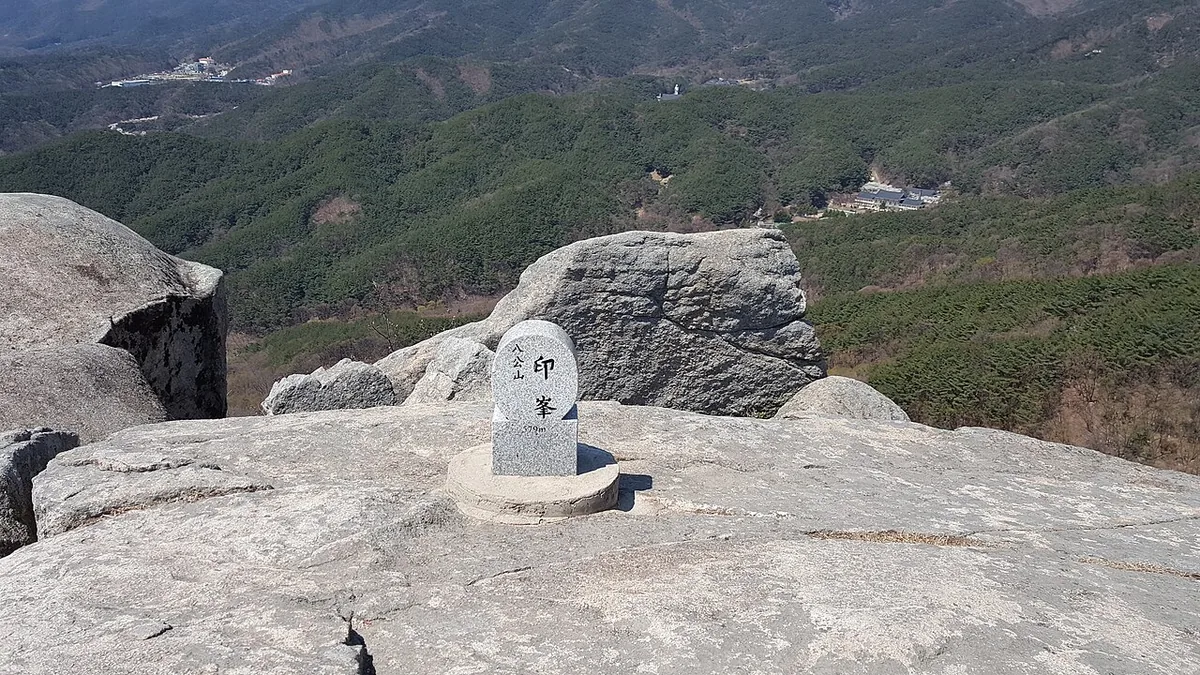
Ride to Sinnimbong for mountain views, hike from Tapgol to Dongbong or climb Gwanbong from Seonbonsa. Each choice has its own starting point.
-
15 Nov – 15 Dec 2026
Autumn fire-season trail closures
The Korea National Park Service closes 148 trail sections in the national parks for the autumn wildfire season: 115 fully and 33 in part. Other trails stay open as usual. Check the closure list for your park before you set off.
Plan your visit
A cable car viewpoint or a mountain climb?
The cable car rises from Daegu’s Donghwa district to Sinnimbong. Dongbong and Birobong are separate peaks farther along the mountain routes. The Seonbonsa approach to Gwanbong begins on the Gyeongsan side of the park.
-
Mountain views with a cable car ride
Sinnimbong by cable car
Start at Palgongsan Cable Car lower station, 51 Palgongsan-ro 185-gil 팔공산케이블카 출발역 · 팔공산로185길 51
Buy your ticket at the lower station’s Sky Rest Area, then take the stairs to the boarding floor. The ride ends at Sinnimbong, where the viewpoint looks across the granite peaks. Choose a return ticket for a viewpoint visit; continuing to Dongbong or Birobong is a separate mountain hike.
Cable car tickets and visitor information -
A ridge hike to Dongbong
Tapgol, Sinnimbong and Dongbong
Start at Tapgol Information Centre 탑골안내소
The official path passes Donghwa Rest Area, climbs the steep wooden steps of Kkaltak Pass and reaches Sinnimbong. It continues via Naktabong and Cheoltap Junction to Dongbong. There are further steep stone and wooden steps above the cable car station, so plan this as a mountain outing with a return route.
Official Tapgol–Dongbong hiking route -
Woodland and rock views on Gwanbong
Gatbawi from Seonbonsa
Start at Seonbonsa trail entrance, Gyeongsan 선본사 탐방로 입구 · 경산
Follow the wooded uphill path from Seonbonsa to Gwanbong, the peak with the Gatbawi Buddha. Bus 803 reaches the Seonbonsa terminus; drivers use Daehan Parking Lot and continue uphill to the trail entrance. This approach is on the Gyeongsan side, separate from the Gwanamsa route that climbs from Daegu.
Official Seonbonsa–Gwanbong route
The transport route below stops at Donghwasa’s entrance
Express 1 from Dongdaegu reaches Donghwasa Entrance, the stop for the temple approach. Use Palgongsan Cable Car or Tapgol Information Centre as your onward destination for the first two choices. For Seonbonsa, travel separately via Hayang Station and bus 803 to the Seonbonsa terminus.
Place details
- Region
- Daegu · North Gyeongsang
- Type of place
- National park
Getting there
Start at Dongdaegu Station
Entrance or stop 동화사입구앞
- Board Express 1 (급행1) at Dongdaegu Station Underpass 2 (동대구역지하도2), bound for Donghwasa.
- Stay aboard past Donghwagyo (동화교). Get off at the next stop, Donghwasa Entrance (동화사입구앞), for the temple approach.
About Palgongsan National Park
Palgongsan was made a provincial park on 13 May 1980 and became national park No. 23 on 31 December 2023. Its 126.058 km² span Daegu’s Dong-gu and Gunwi and Gyeongsan, Yeongcheon and Chilgok in North Gyeongsang.
Silla honoured it as the central of its five sacred peaks, then called Gongsan; the name Palgongsan appears in Joseon and was in wide use by the late 15th century. A granite ridge spreads like a folding screen around Birobong (1,193 m), with Dongbong (1,167 m) and Seobong (1,153 m) beside it, wrapping the north of the Daegu basin. Hard hornfels formed where the granite met older sediment rings it in a band about 1.5 km wide.
The park records 5,296 species, including the red bat and the yellow-throated marten, and 103 designated heritage items. Donghwasa and Eunhaesa are head temples of the Jogye order, and the stone Buddha known as Gatbawi draws people from across the country to pray.
Worth seeing
- Gatbawi 갓바위Stone seated Buddha on Gwanbong, a famous place of prayer.
- Donghwasa 동화사Head temple of the Jogye order’s 9th district.
- Gasan Rock 가산바위One of the park’s 76 landscape features.
Written from the Korea National Park Service park introduction.
Sources
- Korea National Park Service
- Donghwasa Temple stop instructions
- Daegu City visitor transport guide
- Palgongsan Cable Car · tickets and boarding instructions
- Korea Tourism Organization · Sinnimbong cable car destination and address
- KNPS · Tapgol, Sinnimbong and Dongbong
- KNPS · Seonbonsa and Gwanbong
- Seonbonsa · arrival via Hayang Station and bus 803
- KNPS · Palgongsan trail access notices