
National park · South Chungcheong / Daejeon
Gyeryongsan National Park
계룡산국립공원
Walk through Gapsa’s woodland, follow Donghaksa Valley toward Eunseon Falls, or climb from Sutonggol to Geumsu Peak. The Gongju transport route reaches Gapsa.
-
15 Nov – 15 Dec 2026
Autumn fire-season trail closures
The Korea National Park Service closes 148 trail sections in the national parks for the autumn wildfire season: 115 fully and 33 in part. Other trails stay open as usual. Check the closure list for your park before you set off.
Plan your visit
Temple woodland, a waterfall or a valley-to-peak hike?
Gyeryongsan’s entrances lead to different outings. Gapsa is the western temple approach; Donghaksa has a wooded valley below Eunseon Falls, while Sutonggol has its own reservoir, waterfall and mountain trail.
-
Woodland and a temple approach
Ori Forest and Gapsa
Start at Gapsa Parking Lot 갑사 주차장
From the parking lot, follow the approach through Ori Forest to Gapsa. The mostly level, paved section lets you focus on the woodland and temple surroundings. Turn back at the temple for this outing; the onward valley route toward Sambulbong becomes rocky and steeper.
Getting to Gapsa from Gongju -
A valley walk with a waterfall objective
Donghaksa and Eunseon Falls
Start at Donghaksa Parking Lot 동학사 주차장
Walk up Donghaksa Valley to the temple, then continue past Hyangagyo Bridge toward Eunseon Falls. The paved temple approach gives way to mountain terrain, with steeper stone steps around the falls. Use the falls as the turning point and return to Donghaksa Parking Lot.
Official Donghaksa valley route -
A valley and mountain viewpoint
Geumsu Peak from Sutonggol
Start at Sutonggol Visitor Information Center 수통골탐방안내소
The Sutonggol route passes the reservoir, Sutong Falls and Hwasan Valley before climbing toward Geumsu Peak. Expect steep stone steps between the upper valley and Geumsu Peak junction, followed by a more level ridge. Return to the Sutonggol entrance for the journey home.
Official Sutonggol to Geumsu Peak route
The transport route below reaches Gapsa Parking Lot
Start at Gongju Bus Terminal and change at Ongnyong-dong Community Center for bus 320 to Gapsa Parking Lot. This serves the western Gapsa entrance. Donghaksa Parking Lot and Sutonggol Visitor Information Center are separate arrival points for the other outings.
Place details
- Region
- South Chungcheong · Daejeon
- Type of place
- National park
Getting there
Start at Gongju Bus Terminal
Entrance or stop 갑사 주차장
- At the stop to the right of the terminal entrance, take a city bus serving Ongnyong-dong Community Center (옥룡동주민센터). Get off there.
- Cross at the pedestrian crossing on the right. Take bus 320 to Gapsa Parking Lot (갑사 주차장), the access point for the Gapsa side of Gyeryongsan.
About Gyeryongsan National Park
Gyeryongsan became a national park on 31 December 1968, the second after Jirisan. Most of it lies in Gongju, South Chungcheong, with parts in Daejeon, Nonsan and Gyeryong.
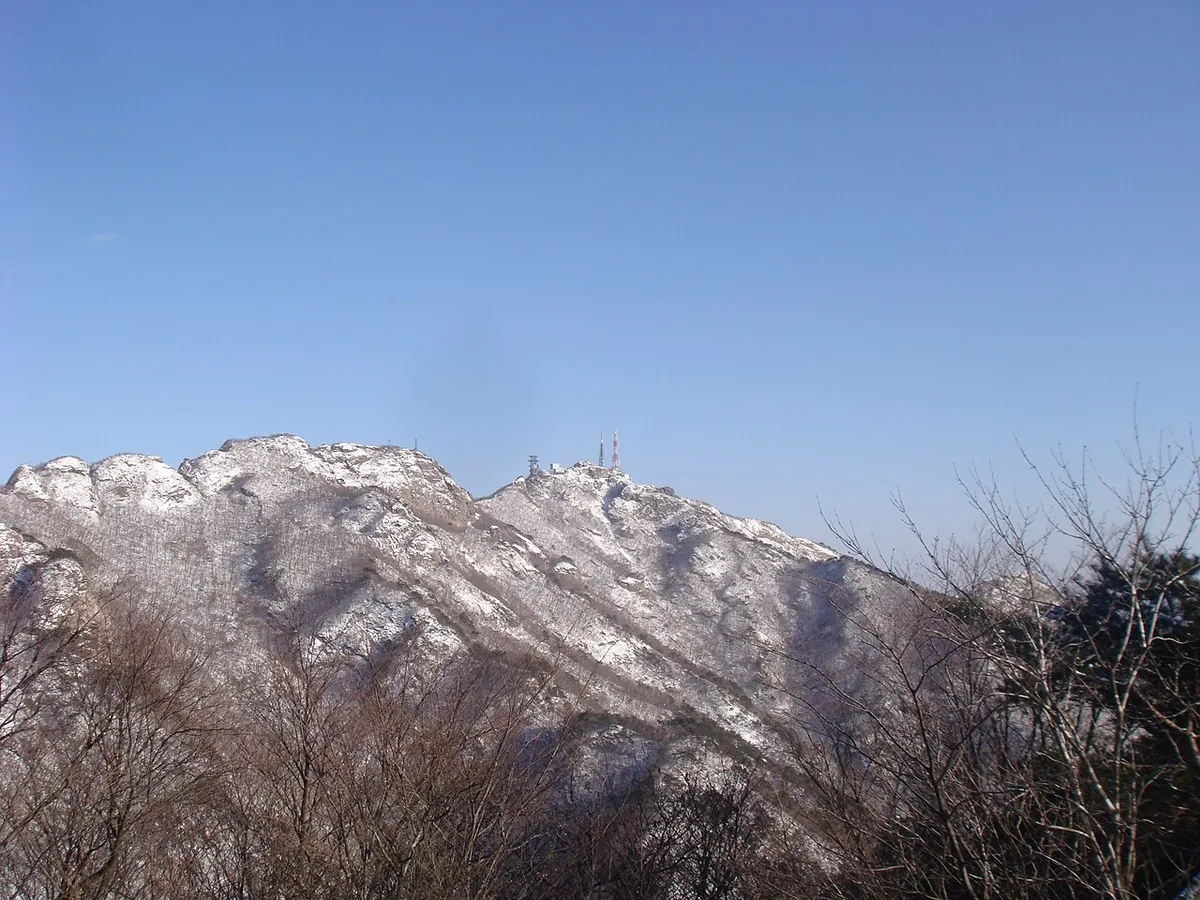
The name joins the hen and the dragon: when Taejo of Joseon surveyed the area for a capital, the monk Muhak is said to have likened the mountain to a golden hen sitting on its eggs and a dragon rising to the sky. Centred on Cheonhwangbong (847 m), it has sixteen peaks, among them Gwaneumbong, Yeoncheonbong and Sambulbong, and ten valleys including Donghaksa and Gapsa.
Baekje held it as its representative mountain, unified Silla named it the western of its five sacred peaks, and Joseon the middle of its three. The granite shows cliffs, joints, tors and domes.
Worth seeing
- Donghaksa 동학사Old temple at the head of the Donghaksa valley.
- Gapsa 갑사Old temple in the Gapsa valley on the western side.
- Sambulbong 삼불봉One of the sixteen peaks on the main ridge.
Written from the Korea National Park Service park introduction.